Monday, March 11, 2013

on Paris Review by Matteo Pericoli

Windows on the World
www.theparisreview.org/blog/2013/03/01/g-mend-ooyo-ulaanbaatar-mongolia/


Windows on the World
www.theparisreview.org/blog/2013/03/01/g-mend-ooyo-ulaanbaatar-mongolia/

G. Mend-Ooyo, Ulaanbaatar, Mongolia

March 1, 2013 | by
A series on what writers from around the world see from their windows.
G.Mend-Ooyo
When I was young, every morning I would take our hobbled horse and walk it in the dawn light. My father would say, “Sleep late like a horse. Rise early like a bird.” As I walked with the horse, I was very happy to have the little birds fly just above the light of dawn as they sang.
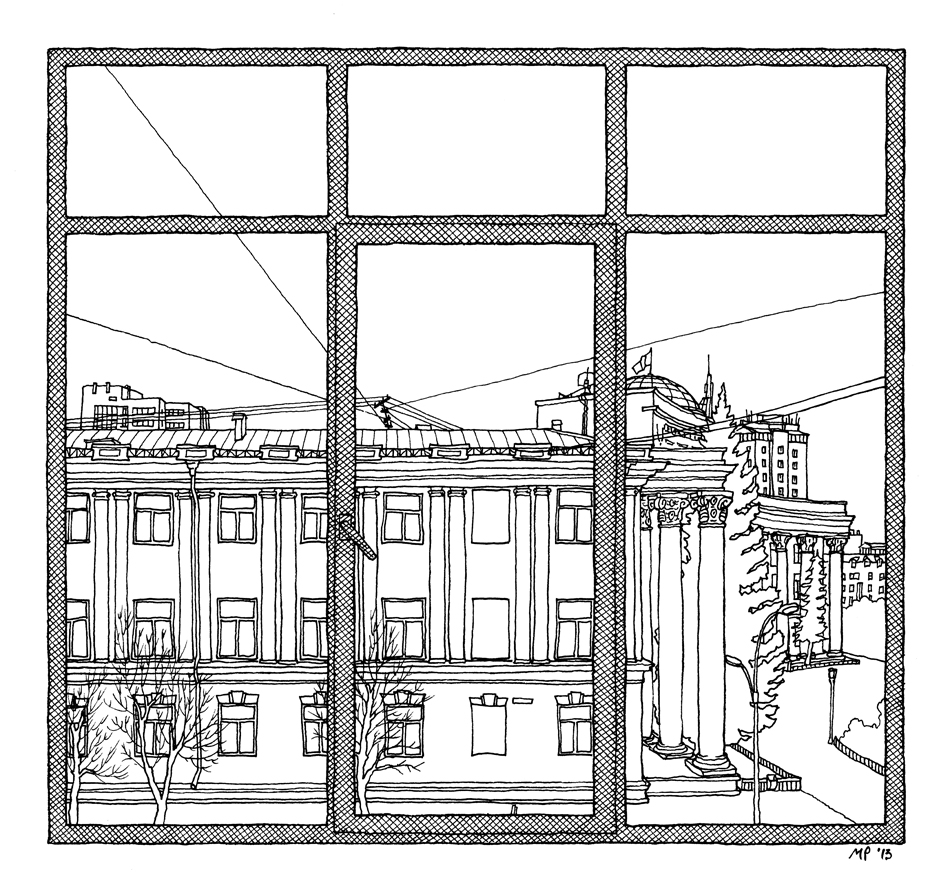
The rhythm of each morning of my life still moves to the beat of my lovely childhood. From the window of my home in the center of Ulaanbaatar, I grasp the pale light in the east. Just as I used to bring in the horses pastured on the wild steppe, I spend time recollecting in my mind many thoughts that have taken flight. The images of life, transected by the window, are a chiaroscuro.
I can clearly see the great seat of learning that is the National University of Mongolia. Sometimes it seems to be an image hanging on walls. A few steps from the window is my writing desk, made from Mongolian pine wood. When I sit at the desk, the world shifts into a different space. The history books grow thicker. There is no time to watch what goes on beyond my window. —G. Mend-Ooyo

Monday, February 25, 2013

"Гэгээнтэн"-ий блог

http://gegeenten-ravjaa.blogspot.com/

Энэхүү блогт "Гэгээнтэн" роман хэвлэгдэн гарснаас хойш сонин хэвлэлд гарсан мэдээ, ярилцага болон утга зохиол судлаачдын бичсэн шүүмж бичлэгүүдийг нэг дор нийтэлсэн.

Sunday, February 24, 2013

ЗУУН ЗУУНЫ ХҮЛЭЭЛТ


А.Очирболдын баримал "Зуун зууны хүлээлт" photo by G.Mend-Ooyo


Юм бүхэн юу нэгнийг хүлээнэ. Мэлмий хурцалж хараагаа сунган хүлээнэ. Чихээ сортойлгож анирлан хүлээнэ. Алсаас юу нэгэн торойх. Үл сонсогдох чимээ. Орчлон бүгд тэнд төвлөрчээ. Анир гүм.
Саяхан нээгдсэн дөрвөн залуугийн уран бүтээлийн үзэсгэлэн дэх “Зуун зууны хүлээлт” хэмээх хүрлээр урласан уран барималын дэргэд би зогсож байна.
photo by G.Mend-Ooyo
Хүлэг морь. Хүлэг гэж ажнай. Хур дэл нь намиран унжиж, газар унхиалах ажнайн чих сортосхийн, ямар нэгэнд төвлөрчээ. Тэгш сайхан ташаан дээр нь байх ирвэс бас л яг тэр чигт бүхий л шөрмөсөө хөвчлөн онилжээ. Эмээлийн бүүрэг тушаа ирвэсийн нэг хөл. Дүүлэн харайхын өмнөхөн биеэ хураах агшин. Энэ бол уран барималч А.Очирболдын бүтээлийн харагдах байдал. Харин үл харагдах орон зайд, үзэгчийн дотоод оршихуйд дүр болоод сэтгэлгээнүүд урган буух аж. Ойролцоо нь баатар эр нумаа эвшээлгэж, сумаа хөвчлөн байгаагаар сэтгэлд дүрслэгдэнэ. Хүлэг морь болоод хүчит ирвэсийн дүүлэн одох гэж төвлөрч буй ан юмуу яг тэр цэг дээр баатар эрийн анхаарал, харц, сонор бүх юм төвлөрч, онилсон нум чивчирэн өдөн гилбэрт сум нь дүүлэн нисэхэд бэлэн байгаа. Сум исгэрэхэд ирвэс дүүлнэ. Ирвэс дүүлэхэд баатар эр хүлэг мориндоо харайн мордоно. Хүлээх агшин тайлагдан, ертөнц өөр хэм хэмнэлд шилжих болно.
Ийм сонор соргог агшин бүрийг зуун зуун жил хүлээх бөгөөд, басхүү агшин бүр оньсоос тайлагдан дараагийн шинэ хэмнэлд шилжих боловч, дахин их хүлээлтийн өмнө тулах нь хорвоогийн жам буюу.
Бидний цөөхөн Монголчуудын билиг оюун сэрж, бийрийн үзүүр чивчирчээ. Туйлын эрхэмсэг, хурууны үзүүр шүргэвэл хиртэм тийм ариухан нандин энэ бүтээлийг би юутай зүйрлэхээ эс мэднэм. Зүйрлэшгүй нэгэн их эрч хүч, гэгээн мэдрэмж судас бүхнээр лугшин байснаа л сананам. Агуу их Микэланжелогийн суут Давидын дэргэд нэг ховсдуулан догдолсноо санаж байна. Суу билигт Занабазарын бүтээлүүдийн дэргэд ер бусын долгис шидэнд ховсдуулан өөр орон зайд шилждэгээ дурснам.
Яг бидний цаг үе бол бүтээх туурвих эрин бололтой. Энэ залуугийн бүтээлийг зуун зуунаар адислагдсан суут туурвилуудын зиндаанд тавих гэсэн санаа бусаа. Яагаад ч юм, тийм суу гайхамшигийг бүтээх билиг авьяас эрч хүч монгол уран бүтээлчдаас мэдрэгдээд байгааг л хэлэх гэсэн совин минь энэ бөлгөө. Монгол төр эдэндээ итгээд томоохон захиалга өгөөсэй. Монголын хөрөнгөтөнүүд ч гэсэн хорь гучин жилийн настай том том байшингийнхаа оронд зуун болоод мянганд хүрч улам үнэд орох томоохон бүтээл туурвилууд буй болгоход хөрөнгөө оруулаасай.
Агуу их хаадын он жилүүд судар шастиртайгаа цуг шарлаж, өвөр зуураа эрх мэдлийн төлөө тэмцэлдэн хүчин чадал сульдаад харь Манжийн эрхшээлд гурван зуун жил бөгтийж, хойд хөршийн хормой доор жижгэрч явсан “зуун зуунд” монголчуудын эрдэм билгүүн, авьяас онгод чухамхүү сэргэн чивчирэх энэ цагийг л хүлээж байсан бус уу.
Авьяаслаг уран барималч Аюурзанын Очирболдын “Зуун зууны хүлээлт” хэмээх бүтээлийн дэргэд хөшсөн бийр минь гэнэт ийн ивэлвэй. Авьяас билгүүн дүү нар минь ар араасаа төрөх суу гайхамшигт бүтээлүүдийг чинь хүлээж байя даа. Билгийн гэрэл цацартугай.
2013.01.13
Г.Мэнд-Ооёо

Friday, February 8, 2013

At Odds With Mongolia’s Modernity, a Poet Seeks Another Way

http://blogs.wsj.com/scene/2013/02/07/at-odds-with-mongolias-modernity-a-poet-seeks-another-way/?mod=WSJBlog&mod=LifeCulture


Jonah M. Kessel for The Wall Street Journal
ULAN BATOR, Mongolia — As a student in the 1980s, Gombojavyn Mend-Ooyo formed a secret literary society and wrote poetry filled with traditional nomadic themes at a time when Mongolia, then a communist state, was trying to suppress those values.
Today he is considered the country’s poet laureate, and an important figure in the fight to retain its traditional culture. As its fast-growing economy puts its modernization into overdrive and draws its population away from its nomadic roots, he has his work cut out for him.
“It is a big shame for us that the country is so focused on mining, at the detriment of herders and the traditional ways of life,” says Mr. Mend-Ooyo, 60 years old, sitting behind his cluttered desk in an old Soviet building in Ulan Bator. “It’s really difficult to bring back lost culture once it’s gone.”
Born into a nomadic family, he spent his early years moving across the steppe, herding goats and sheep throughout the day and listening to his elders play traditional music on horsehead fiddles at night. “We would move 20 times in a year,” he says. “Nomads feel the land has spirits and a soul, so we have songs about each new place we move to.”
Riding horses since the age of 3, Mr. Mend-Ooyo grew up when Mongolia was under Russian control. His father taught him the indigenous Mongolia script by drawing it in the snow that fell outside their circular tent, or ger, during the long winter months — “since classes at school were taught only in the Russian-influenced Cyrillic script,” he says. The family prayed nightly in secret, hiding their Buddhist statues in a box during the day.
As a teenager in the countryside, he got interested in writing, thanks in part to Dorjiin Gombojav, a controversial poet and translator who had alienated officials in Ulan Bator. As punishment, Mr. Gombojav had been sent to teach at the rural school Mr. Mend-Ooyo attended.
Mr. Mend-Ooyo wrote his first lines of poetry under Mr. Gombojav’s guidance. “He taught me the importance of Mongolian language and our traditions,” he says.
In the 1970s, Mr. Mend-Ooyo moved to Ulan Bator, Mongolia’s only major city, to attend university. There he helped form Fire, an underground literary group. At the time, communist censors “wouldn’t let groups meet,” he says. “They were always watching us, so we had to be very careful and meet in people’s homes at night.”
He worked at a state radio station through the ‘80s and was allowed to publish some of his poetry after it was vetted by officials. When single-party communist rule ended in 1990, after almost seven decades, he began publishing more of his work, including the writing that espoused his pastoral roots and eventually became his best-known poems.
In them, he describes homesick horses neighing at dawn, saddle studs “sparkling at night” and how sunshine materializes between the gaps in clouds — the observations of someone used to traveling vast distances on horseback.
“The idea of traditional Mongolian culture is paramount to Mend-Ooyo. He is trying to keep the nomadic spirit alive in spite of modernization,” says Simon Wickham-Smith, a Mongolian-literature scholar who has translated several of Mr. Mend-Ooyo’s books into English. Mr. Mend-Ooyo, he adds, “is arguably the most important poet in Mongolia today, and certainly the one with the most presence, though some of the newer generation might say he is a bit stuck in the past.”
Bavuudorj Tsogdorj, 43, a member of the younger generation of Mongolian poets, believes his increasingly urbanized countrymen will eventually appreciate their nomadic tradition. “Younger poets are now writing with European thoughts and styles, but they will come back to Mongolian poetry and thoughts someday. At that time Mend-Ooyo will be really valuable,” he says.
“Mend-Ooyo is Mongolia’s poetry representative — he is a genuine nomadic poet,” he adds.
Mr. Mend-Ooyo is now channeling his energy into rethinking the modern Mongolian way of life. He envisions a 21st-century nomadic community in which schools, health care and markets move with the people, allowing them to maintain their mobility while providing some of the benefits of contemporary society. “It’s my dream to build it,” he says.
“The reason nomads come to the cities is to get education for their children, hospital access. We want to allow nomads to be more modern, to use cellphones and Internet,” he says. “Keep the old life, just make it better.”
He is starting small, beginning in his home province some 600 kilometers from Ulan Bator where he writes in the summer and where much of his family still lives and herds. There, he is discussing his plans with others in the community, as well as experts who can advise on ways to realize it.
“My life is the mirror of Mongolia,” he says. “I grew up in the classic nomadic way of life, then moved to the city. But even after all these years I am not a city person. All my dreams are about the countryside, and I feel like I am living in a birdcage. Now I am planning to move back to the countryside. I just hope Mongolia will too.”

Tuesday, August 7, 2012

STANDING AMID THE OCEAN MISTS


In the rain and wind, beards turn white,
the brain’s inscriptions grow frayed.  Writing grows unclear
in contemplation.  The mind grows towards the land
through the images which reveal antiquity.

Our own time blazes and blossoms,
summer and  fall.  The flower and the butterfly.
Awareness comes from the far distance,
in explanation.  This is the thought of mountains.

The thought of mountains is like our the thought of our elders.
The land is cleansed by the brightness of wisdom.
Standing amid the ocean mists, my legs
are joined with the clouds floating in the distant blue.

The cloudy mists whisper to the land,
I shall speak to my zither of transcendent wisdom.


10 August 2009

Friday, July 27, 2012

“ЕРТӨНЦИЙН ЯВДАЛ” ОЛИМПИЙН ТЭНГЭРТ ХУР БОЛОН БУУЖ, ДЭЛХИЙН СОНОРТ ЭГШИГЛЭНЭМ


Зохиолч, орчуулагч, судлаач Я.Ганбаатар

Аливаа шүлгийг олон талаас нь, олон янзаар тайлбарлан дүгнэж болно. Гэвч энэ удаад би багтаамжтай шүлэг гэдэг нэгэн ойлголтыг хөндөн ярихыг хүсч байна. Тийм ээ, багтаамжтай шүлэг. Ийм ойлголт ямар ч зүйл дээр байж болох ч шүлэг гэдэг жижиг хэмжээний уран бүтээл дээр авч үзэхэд аргагүй л уран бүтээлчийн авьяас чадал, билиг онгод, ур ухаан, мэдлэг боловсролыг бэлхнээ тусган илтгэсэн, аргагүй л чухаг содон ухагдахуун мөн. Багтаамжтай шүлэг. Энэ бол жижиг хэмжээний шүлгийн маш бага орон зайд асар ихийг, бүр хязгааргүй ихийг багтаасан, агуулга, илэрхийллийн далайцтай тийм сайн шүлгийг хэлж байгаа хэрэг. Ийм жишээ дэлхийн яруу найргийн их далайгаас олныг шүүрдэн үзэж, шүүн хэлэлцэж болно. Энд нэгэн жишээ татья: 

Thursday, July 26, 2012

“Хөх нулимстай тэнгэр” номын хур буулгалаа

lhttp://art.news.mn/content/114941.shtml

Өвөрмонголын яруу найрагч Эрэнцэндоржийн Болдын “Хөх нулимстай тэнгэр” шүлгийн түүвэр Англи, Монгол хэлнээ хэвлэгдэн гарч, “Арт хаус” төвд өнөөдөр номын баяраа хийлээ. ӨМӨЗО-ны яруу найрагчийн эл бүтээлийг англи хэл рүү утга зохиолын орчуулагч, монгол судлаач Саймон Вэкхам Смит орчуулан уншигчдын гарт хүргэсэн юм. Тиймээс уг арга хэмжээг Соёл, яруу найргийн академиас хоёр уран бүтээлчийн номын баярыг хамтад нь зохион байгуулав.


Wednesday, July 25, 2012

Altan Ovoo is available in English


Зохиолч Г.Мэнд-Ооёогийн “Алтан Овоо” хөлгөн судар англи хэлнээ анх 2007 онд орчуулагдан хэвлэгджээ. Уг хэвлэлийн засаж сайжруулсан хоёр дахь хэвлэл “Altan Ovoo” ном саяхан хэвлэгдлээ. Английн орчуулагч, судлаач Саймон Вэккхам-Смитийн орчуулгаар хоёр дах удаагаа англи хэлт уншигчдад хүрч буй эл бүтээл нь монгол хэлнээ таван удаа хэвлэгдсэн билээ.


  Altan Ovoo, first published in 1993, represents the Mongolian poet G Mend-Ooyo’s greatest literary achievement to date.  He refers to it as an almanac, relating his own experience growing up in the Dariganga region of Mongolia, and presenting the history and customs of his homeland through the focus of the topographical Altan Ovoo of the title.
Altan Ovoo stretches across time, but it is not a history; it speaks of Mongolian culture, but it is not a cultural guidebook:  rather it reveals an individual’s feeling for, understanding of and closeness to the worlds of dream and magic, the power of language, the closeness of family and the hardships and joys of nomadic life.  Mend-Ooyo’s vision presents us with a world of flying horses, musicians, highway robbery, nomadic travel, astrology, hills and mountains, steppes and weather, lovers and words, a world through which the story of humanity gradually unfolds, both implicitly and explicitly, carried on the back both of metaphor and story.
---
“Altan Ovoo is a true song of home. I do not know of another work of such pure, imaginative power”
                                                                    S.Erdene

“Through the flow of power across the mirror of his mind, a flow which is not dependent upon the awakening of form, omens, intuition, dreams or feeling, G.Mend-Ooyo engages with the power of the local spirits and guardians of his own country, and passes to us a translation of the secret language of that country…”
                                                                   D.Uriankhai


Tuesday, July 17, 2012

The exhibition “The Steppe’ opens

Add caption
 
The work of the Mongolian poet G.Mend-Ooyo encompasses many different genres, and can be seen as an example both of the traditional and the contemporary.

In 2006, Mend-Ooyo established an annual calligraphy exhibition.  In 2010, this took the form of a solo exhibition entitled “The Crystal Temple of Meaning,” and the following year he created, with D.Battömör, “Mother Earth,” which had a profound effect on those who saw it.
“Image from Poetry” is Mend-Ooyo”s melodic exposition of oriental poetics, and its individual pieces celebrate the natural world, revealing his deep connection with the traditions of Mongol culture.
This year”s exhibition focuses on contemporary calligraphy and in it, we can feel how, as well as showing the melody of colored inks, the texts are able to reveal the rhythm of the artistic heart.
Mend-Ooyo s born into a nomadic family, moving across the steppe, and his poetry reveals the movement of his ideas, as though across the broad and endless steppe.  This year, then, he has chosen to name the exhibition, with pieces from among the Mongolian Academy of Poetry and Culture”s collection, “The Steppe.”
english.news.mn/content/113721.shtml